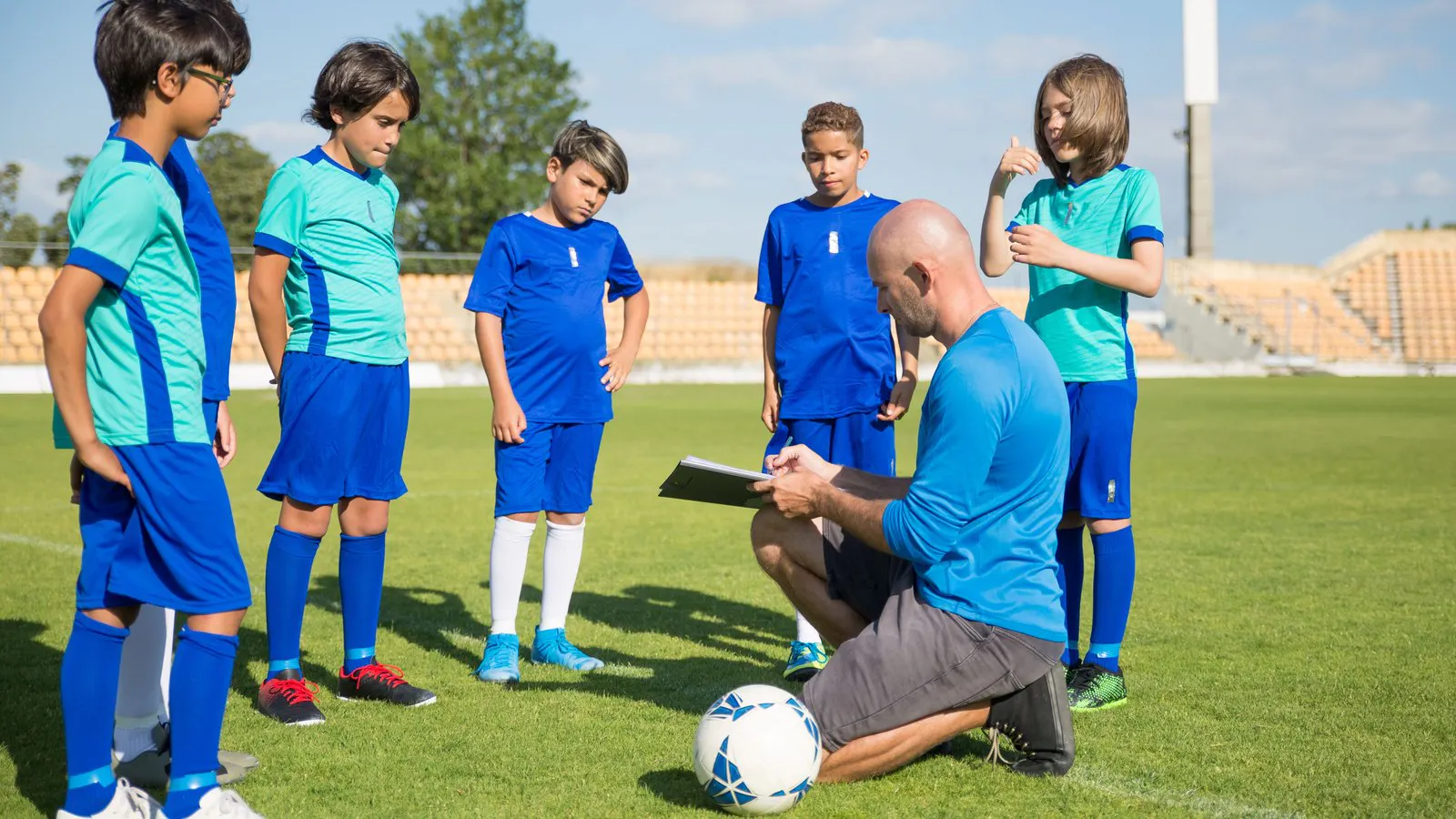
Video analysis is no longer just for professionals. But before an amateur club gets started, three questions come up: What does it cost? How much time will it take the volunteer coaches? And are we even allowed to film our players? Here are the answers, plus a practical example from the Westfalenliga.
What does video analysis cost an amateur club?
The costs consist of a few building blocks – many of which a club already has:
- Recording device: smartphone, tablet, action cam or camcorder. Often already available – enough to get started.
- Tripod or telescopic mast: for a stable, elevated position. More important than an expensive camera.
- Storage and power: SD cards or SSD, power bank, spare battery. One game in HD takes several GB.
- Computer or tablet for analysis: for tagging, evaluating and presenting – usually the coach's laptop or tablet.
- Analysis software: for tagging, drawing, creating playlists and sharing. From free to professional platform.
- Optionally an AI camera: automatic recording without a camera operator, hardware plus usually a subscription. In the practical example below, that is €1,300 to €1,600 for the camera and €50 a month for 10 recording hours.
- Data protection effort: consent forms, information sheet, record of processing activities. Set it up once, then maintain it.
Software prices (according to manufacturer websites, October 2026): free tools such as Kinovea or LongoMatch Basic; entry-level solutions such as miniATHLYZER from €29/year; team software such as ATHLYZER from €33/month (annual billing) or Dartfish from €40/month; one-time licences such as utilius vs Handball from €299.
Tip: Start with existing equipment and a trial period, then invest. Many providers offer trials of 7 to 30 days. Which camera is suitable is covered in Which camera do I need for video analysis? – and why an AI camera alone is not yet analysis in A camera is not analysis.
How much time does video analysis take?
The effort is spread across five steps – and can be reduced at each one:
- Setup and recording: a fixed camera position, a checklist for battery and storage, one responsible person (e.g. assistant coach, parent, injured player).
- Tagging: Live tagging during the game saves the most time. If you only tag afterwards, you watch the game a second time.
- Selection: Don't show everything. A few clips on one or two topics are enough for a team talk, often just three to five.
- Team talk: keep it short, ask questions, show what went well.
- Archiving and deleting: a fixed routine so that data doesn't sit around indefinitely (see data protection).
Division of labour helps: In amateur sport, the head coach doesn't have to do everything. Recording, tagging and selection can be shared – a common, simple scheme ensures that everyone tags the same way.
Data protection: Are we allowed to film our players?
In short: yes, but with rules. Video recordings are personal data and fall under the GDPR. The most important guidance in Germany comes from the data protection supervisory authorities (e.g. the LfDI Baden-Württemberg) and from the German Football Association's (DFB) position paper on photo and video use in football of 10 April 2020, which according to the DFB was coordinated with the Hessian Commissioner for Data Protection.
Which legal basis applies?
- Legitimate interest (Art. 6(1)(f) GDPR): For internal performance analysis in amateur football, the DFB generally considers the club's interest in sporting success to be a sufficient basis. Players can object (Art. 21 GDPR).
- Consent (Art. 6(1)(a), Art. 7 GDPR): always possible if it is given voluntarily – and the preferred solution for children and youth teams. It can be withdrawn at any time with effect for the future (Art. 7(3)).
- Publication (website, Instagram, Facebook): according to the LfDI Baden-Württemberg, generally only with explicit consent – all the more so the more a single person is in the foreground.
- Right to one's own image (Sections 22, 23 KUG): According to the LfDI Baden-Württemberg, the relationship between the German Art Copyright Act (KUG) and the GDPR is complicated and disputed. In practice: internal analysis is governed by the GDPR; for publications, the KUG's principles feed into the balancing of interests.
What applies to children and young people?
The DFB recommends age levels for the use of video technology in football. This is an association position, not a law – but a good guideline for other sports too:
- Under 10 years: generally no use of video technology (exception: institutional talent development).
- 10 to 14 years: generally no use, with exceptions including talent development and scouting.
- 14 to 16 years: generally permitted; opposition scouting only with the consent of everyone filmed (exceptions in performance sport).
- 16 and over: generally permitted.
Who has to give consent? For minors, usually the parents or legal guardians – templates from several German state sports federations provide for both parents. Common practice: from about 14, the young person signs as well; according to the DFB, consent without the parents is only possible from 16. There is no fixed statutory age limit for this case.
Inform, limit, delete
- Inform (Art. 13 GDPR): communicate the purpose, legal basis, retention period, recipients and rights at the time of recording – e.g. via an information sheet or a clearly visible notice. A template: GDPR notice for venues (PDF, German).
- Stick to the purpose: don't use analysis videos for social media without a new legal basis.
- Limit retention: In essence, the DFB recommends keeping full recordings only briefly (roughly until the next training sessions) and individual clips roughly until the next season.
- Sensitive scenes: only use videos that show, for example, injuries with explicit, documented consent.
- Sharing within the team: a closed group is less intrusive than a publication – but still share only as much as necessary.
Software, cloud and service providers
If a provider processes videos on behalf of the club (e.g. cloud storage), you need a data processing agreement under Art. 28 GDPR. For providers outside the EU, the rules on transfers to third countries also apply (Art. 44 et seq. GDPR). Servers in the EU or in Germany reduce legal uncertainty here. ATHLYZER stores data on servers in Germany, works in compliance with the GDPR and can also be used completely offline – then the videos never leave your own device.
And the opponent?
For opposition scouting, according to the DFB, obtaining consent from everyone filmed is often not feasible in practice; in youth football under 14, the DFB generally does not consider it justifiable. Point the camera at the pitch and avoid focusing on spectators where possible.
Checklist: Starting video analysis in your club
- Define the goal: What will we use video for (match analysis, training, technique)?
- Write a short concept: purpose, who films, who has access, how long videos are stored.
- Prepare consent forms or an information sheet (for minors: parents).
- Add the processing to your record of processing activities.
- Choose software, check the data processing agreement, use the trial period.
- Define the camera position and the responsible person.
- Choose a simple tagging scheme (use a ready-made template).
- Set up a deletion routine.
FAQ
Is there free video analysis for clubs?
Yes, e.g. Kinovea (open source) or LongoMatch Basic. However, they are limited, for example when it comes to sharing within the team. Affordable entry-level solutions start at a few tens of euros per year.
Do we need consent to film in training?
For adult teams, according to the DFB, legitimate interest can be sufficient for internal analysis – with information and the right to object. For minors, parental consent is the recommended solution. Publications generally always require consent.
Can we post match clips on Instagram?
As a rule, only with the explicit consent of the people shown – for minors, of their parents.
How long can we keep videos?
Only as long as they are needed for the purpose. The DFB recommends: full recordings briefly, individual clips roughly until the next season.
At what age does video analysis make sense?
In football, the DFB generally recommends video technology only from age 14 (exceptions in talent development). Research also shows that older, more experienced players benefit more from video feedback.
Does video analysis work without the cloud?
Yes. ATHLYZER can be used completely offline; the cloud is only needed to save storage space or to sync devices.
Conclusion
Video analysis in amateur clubs rarely fails because of money – more often because of time and uncertainty about data protection. If you start with existing equipment, a lean scheme and clear rules for consent and deletion, you have both under control.
Start with a ready-made scheme and offline mode: Try ATHLYZER free for 30 days, no credit card required · For individual coaches: miniATHLYZER
This article is not legal advice and refers to the legal situation in Germany. For specific questions, contact your regional sports federation, your club's data protection officer or a legal adviser.
Sources (in German)
- DFB: Position paper “Foto- und Videonutzung im Fußball – Datenschutzrechtliche Betrachtung” (10 April 2020)
- LfDI Baden-Württemberg: FAQ for clubs · FAQ on photography and data protection · Guidance on data protection in clubs
- VIBSS (LSB NRW): Image rights and video surveillance
- Consent templates: LSB Niedersachsen · LSV Saarland · LSB Sachsen
- GDPR (Art. 5, 6, 7, 13, 21, 28, 44 et seq.) · KUG §§ 22, 23